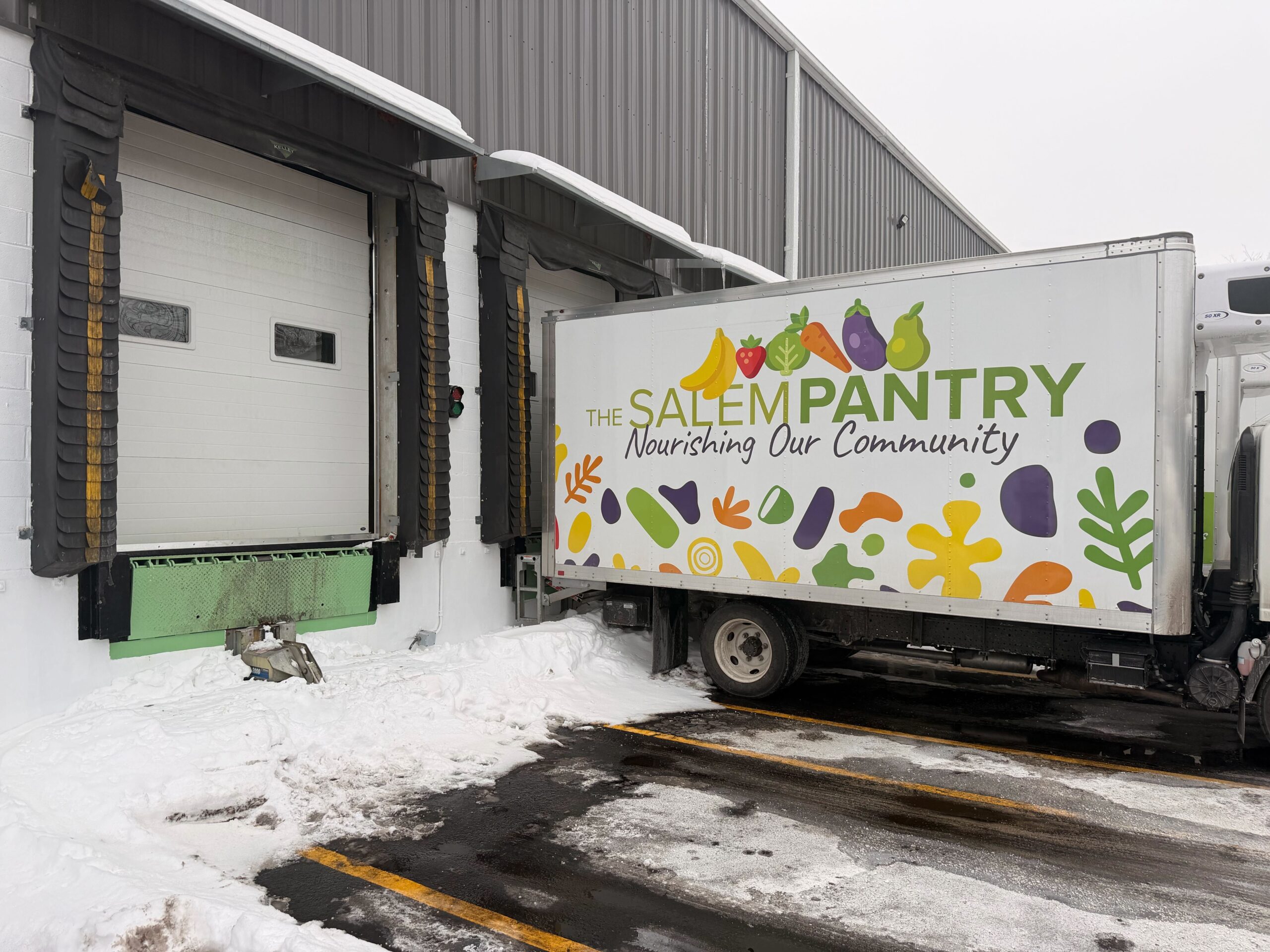
As we at The Salem Pantry drive into work each morning, past mountains of snow from the last storm, in freezing temperatures with even colder days on the horizon, we can’t help but think about our neighbors who may be facing additional challenges during these months.
Food insecurity is a year-round issue, but winter adds layers of complexity that make access to food more difficult for many in our community. Here are some of the ways winter can make accessing food even harder:
Transportation Challenges
Snow and ice make getting to grocery stores and food pantries significantly harder. Public transportation runs less frequently or stops entirely during storms, with ride-share fees spiking. Sidewalks, if they are cleared, become narrow and icy, creating barriers for people with mobility issues or those using wheelchairs and walkers. Weather events force difficult decisions about whether to venture out or postpone a trip to the grocery store.
Increased Costs
Winter months see household heating costs rise substantially. For families on fixed or limited incomes, this means adjusting other budget categories, and food is often the most flexible expense. At the same time, access to affordable fresh produce decreases as local farms reduce production. This creates a gap in nutritious food options during a season when maintaining health is especially important.
Health Complications
Winter also brings increased healthcare needs. Cold and flu season results in missed work days and additional medical expenses. Children staying home sick lose access to school meals. Cold weather can worsen chronic conditions like arthritis, asthma, and cardiovascular issues, making daily tasks more difficult. The shorter, darker days deepen depression and isolation, making it harder for some neighbors to prepare meals or ask for help.
We understand that winter is hard, and that a warm meal matters even more during these months.
That’s why we’re adapting to meet our neighbors where they are.
- The Truck, our Mobile Pantry, continues to operate year-round, with sites moving indoors whenever possible to provide warm, accessible distribution spaces
- The Market maintains its five-day-a-week schedule with a reservation system that minimizes outdoor wait times
- Our home delivery and medically tailored grocery program operates at full capacity, with volunteers bringing food directly to neighbors who cannot travel to our locations.
While many experience winter as an inconvenience that requires an extra layer of clothing or a few more minutes to clear your car, for some of our neighbors, it creates barriers that can feel impossible to overcome.
Helping a neighbor this winter can look like shoveling their driveway, checking in on someone who lives alone, or supporting The Salem Pantry through donations, volunteer time, or sharing information about our services with those who may need them.
Winter may be long and cold, but together we can make sure every neighbor has access to the food they need.
An Update from The Salem Pantry:
We are excited to have officially moved into our new facilities at 220 Highland Avenue. These expanded facilities will ensure we can impact even more of our community with increased storage, more loading docks, and our offices and warehouse under one roof. There is a lot of work to do to outfit the space with all we need to support our programs and our partner organizations through our food distribution hub. Once this project is complete, it will serve as a crucial piece in securing the food safety net here on the North Shore
More is to come on how our community can get involved and support this important work! Stay tuned.